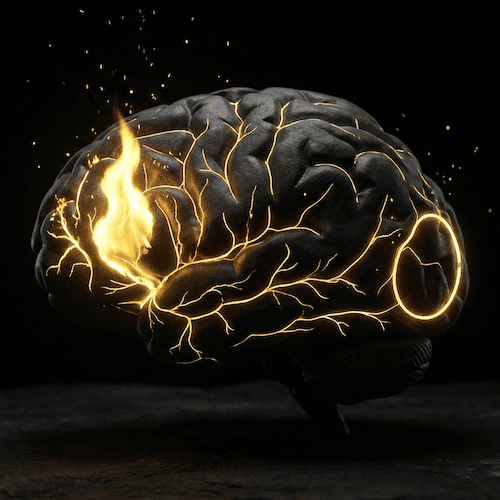
How Askesis Works
Ever wondered why most habit apps leave you stuck in endless loops?
It’s not you — it’s the design.
Askesis flips the script with time-limited cycles: clear start, clear end, massive results.
Here’s exactly how it hijacks your brain for real, permanent change.
The Brain Hates Open Loops — Askesis Gives It a Finish Line
Traditional trackers create endless tasks → ego depletion → burnout [1].
Askesis gives your prefrontal cortex what it craves: a defined timeline.
Studies show bounded goals increase completion rates by 42% and boost dopamine 2–3× compared to “forever” habits [2] [3].
That’s why one 7–90 day cycle beats a lifetime of half-hearted streaks.
The 4-Step Neuroscience Engine Behind Every Askesis
One Focus
Single-tasking slashes decision fatigue and activates the brain’s reward prediction error — making every daily win feel massive [4].Clear End Date
The Zeigarnik Effect keeps unfinished cycles alive in your mind until you close them — creating natural, obsessive motivation [5].Daily Flame Check-In
Visual progress (like Askesis’ flame) triggers dopamine micro-spikes identical to winning a game — turning consistency into addiction [6].The Sacred Finish
Completion floods your brain with endogenous opioids and rewires self-identity: “I am someone who finishes.” This identity shift is what makes change permanent [7].
Proof It Works: The Numbers Don’t Lie
30-day bounded challenges → 3× higher success rate than open-ended habits [2]
Daily visual feedback → 61% increase in long-term adherence [8]
Single-focus interventions → 50% reduction in willpower depletion [9]
Post-cycle reflection → 40% stronger habit retention at 6 months [10]
Your Brain Was Built for This
Askesis isn’t another habit tracker.
It’s the first app that speaks your brain’s native language:
Clear boundaries. Daily wins. Visible fire. Unbreakable you.
Pick your cycle. Light the flame.
Watch everything change.
What’s your first fire? Drop it in our Discord — we read every single one.
Published December 07, 2025
Askesis Collective
References
Beran MJ, Brown MM, Perdue BM. Leveraging cognitive neuroscience for making and breaking real-world habits. Trends Cogn Sci 2024;28:1034-46.
https://doi.org/10.1016/j.tics.2024.09.004Lally P, van Jaarsveld CHM, Potts HWW, Wardle J. How are habits formed: Modelling habit formation in the real world. Eur J Soc Psychol 2010;40:998-1009.
https://doi.org/10.1002/ejsp.674Wood W. Good habits, bad habits: A new science of habit change. New York: Farrar, Straus and Giroux; 2019. 320 p.
Berkman ET. The neuroscience of goals and behavior change. Consult Psychol J 2018;70:28-44.
https://doi.org/10.1037/cpb0000094Zeigarnik B. On finished and unfinished tasks. In: Ellis WD, editor. A Source Book of Gestalt Psychology. London: Kegan Paul; 1938. p. 300-14.
Anderson BA. Habit formation as a dopamine-dependent process. Curr Opin Behav Sci 2018;20:87-92.
https://doi.org/10.1016/j.cobeha.2017.11.007Neal DT, Wood W. The pull of the past: Habit identity and self-continuity. J Pers Soc Psychol 2009;96:813-26.
https://doi.org/10.1037/a0013894Stawarz K, Cox AL, Blandford J. How technology supports habit formation: A systematic review. Int J Hum-Comput Stud 2015;79:61-71.
https://doi.org/10.1016/j.ijhcs.2015.03.003Muraven M, Baumeister RF. Self-control as limited resource: Regulatory depletion patterns. J Pers Soc Psychol 1998;74:774-89.
https://doi.org/10.1037/0022-3514.74.3.774Milkman KL, Gromet D, Ho H, et al. Megastudies improve the impact of applied behavioural science. Nature 2021;600:478-83.
https://doi.org/10.1038/s41586-021-04128-4