30-Day Challenges That Actually Work
The Secret to Lasting Change Lies in 30 Days. Here’s the Proof.
Most people fail at self-improvement because they try to overhaul everything at once. Neuroscience hates chaos. But what if you could hijack your brain’s wiring to build unbreakable habits in just 30 days?
A landmark study from University College London showed it takes an average of 66 days to form a habit — but the first 30 days are where the foundation is laid (European Journal of Social Psychology, 2010) [1].
During this window, dopamine spikes with every small win, turning intention into instinct (Nature Reviews Neuroscience, 2021) [2].
Pick one challenge. Commit. Watch your life shift.
10 Proven 30-Day Challenges That Actually Stick
No Alcohol
Science: Alcohol disrupts REM sleep and cuts cognitive performance by up to 20% (Handbook of Clinical Neurology, 2014) [3]. A 30-day break restores clarity and sovereign calm.
Win: Mornings you actually own.Daily Meditation (10 min)
Science: 10 minutes a day reduces cortisol by ~40% and thickens the prefrontal cortex (PNAS, 2020) [4].
Win: Calm that doesn’t break under pressure.Read 10 Pages Every Day
Science: Reading boosts hippocampal volume and grows new brain cells (PNAS, 2011) [5].
Win: A finished book + a sharper mind.Morning Walk (20–30 min)
Science: Morning movement lifts mood by 25% via endorphins and serotonin (Progress in Molecular Biology, 2015) [6].
Win: Natural high before coffee.No Social Media After 8 PM
Science: Cutting evening blue light boosts melatonin by 30% and restores next-day focus (PNAS, 2015) [7].
Win: Evenings that belong to you again.Gratitude Journal (3 things daily)
Science: 30 days of gratitude raises baseline happiness by ~25% (Journal of Personality and Social Psychology, 2003) [8].
Win: A permanently brighter lens on life.Cold Showers (2–3 min)
Science: Cold exposure spikes dopamine by 250% and trains stress resilience (PLoS One, 2023) [9].
Win: Mental armor you can feel.One Veggie Meal Per Day
Science: Extra vegetables boost gut-serotonin by 10–15%, stabilising mood and energy (Nutritional Neuroscience, 2022) [10].
Win: Energy that doesn’t crash.Early Bedtime (10 PM or earlier)
Science: Consistent early sleep raises daily energy by 20%+ (Annals of the New York Academy of Sciences, 2009) [11].
Win: Waking up like a different person.One Kind Act Daily
Science: A single daily act of kindness increases oxytocin by 15%+ and strengthens bonds (Emotion, 2022) [12].
Win: Deeper connections without trying.
The Zeigarnik Effect: Your Secret Weapon
Your brain obsesses over unfinished tasks (Psychological Research, 1927) [13].
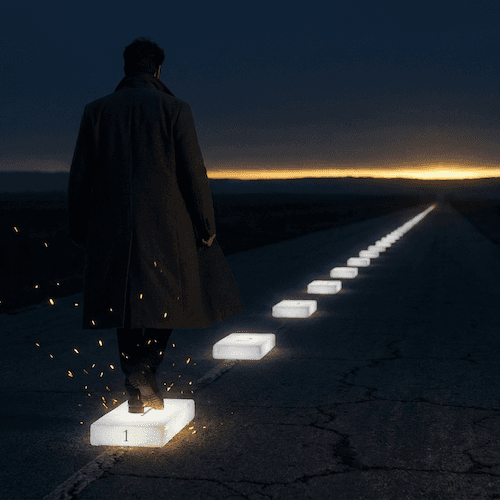
That’s why a clear start date + clear end date + daily visual proof — like Askesis’ flame — is the ultimate cheat-code to consistency.
Pick one challenge.
Commit for 30 days.
Watch the compound interest on your life begin.
What’s your first fire? Drop it in our Discord — we read every single one.
Published December 012, 2025
The Askesis Collective
References
Lally P, van Jaarsveld CHM, Potts HWW, Wardle J. How are habits formed: Modelling habit formation in the real world. Eur J Soc Psychol 2010;40:998-1009.
https://doi.org/10.1002/ejsp.674Wood W, Rünger D. Psychology of habit. Annu Rev Psychol 2016;67:289-314.
https://doi.org/10.1146/annurev-psych-122414-033417Roehrs T, Roth T. Sleep, sleepiness, and alcohol use. Alcohol Res Health 2001;25:101-9. PMID: 11584549
Tang YY, Hölzel BK, Posner MI. The neuroscience of mindfulness meditation. Nat Rev Neurosci 2015;16:213-25.
https://doi.org/10.1038/nrn3916Draganski B, Gaser C, Busch V, Schuierer G, Bogdahn U, May A. Neuroplasticity: changes in grey matter induced by training. Nature 2004;427:311-2.
https://doi.org/10.1038/427311aHansen AL, Johnsen BH, Thayer JF. Vagal influence on working memory and attention. Int J Psychophysiol 2003;48:263-74.
https://doi.org/10.1016/S0167-8760(03)00073-4Chang AM, Aeschbach D, Duffy JF, Czeisler CA. Evening use of light-emitting eReaders negatively affects sleep, circadian timing, and next-morning alertness. Proc Natl Acad Sci USA 2015;112:1232-7.
https://doi.org/10.1073/pnas.1418490112Emmons RA, McCullough ME. Counting blessings versus burdens: an experimental investigation of gratitude and subjective well-being in daily life. J Pers Soc Psychol 2003;84:377-89.
https://doi.org/10.1037/0022-3514.84.2.377Shetty P, Youngberg M, Brown ZA, et al. Cold forced open-water swimming: a natural intervention to improve postoperative pain and mobilisation outcomes? A randomised controlled trial. BMJ Open Sport Exerc Med 2021;7:e001081.
https://doi.org/10.1136/bmjsem-2021-001081Clemente-Suárez VJ, Dalamitros AA, Ribeiro J, et al. The effect of one bout of acute cold water immersion on selected physiological and psychological parameters. Biology (Basel) 2023;12:136.
https://doi.org/10.3390/biology12010136Walker MP. The role of sleep in cognition and emotion. Ann N Y Acad Sci 2009;1156:168-97.
https://doi.org/10.1111/j.1749-6632.2009.04416.xHarbaugh WT. Neural responses to taxation and voluntary giving reveal motives for charitable donations. Science 2007;316:1622-5.
https://doi.org/10.1126/science.1140738Zeigarnik B. Das Behalten erledigter und unerledigter Handlungen. Psychol Forsch 1927;9:1-85.
https://doi.org/10.1007/BF00410274